On-Demand Webinar
On-Chain and Off-Chain: Closing the Stablecoin Compliance Gap
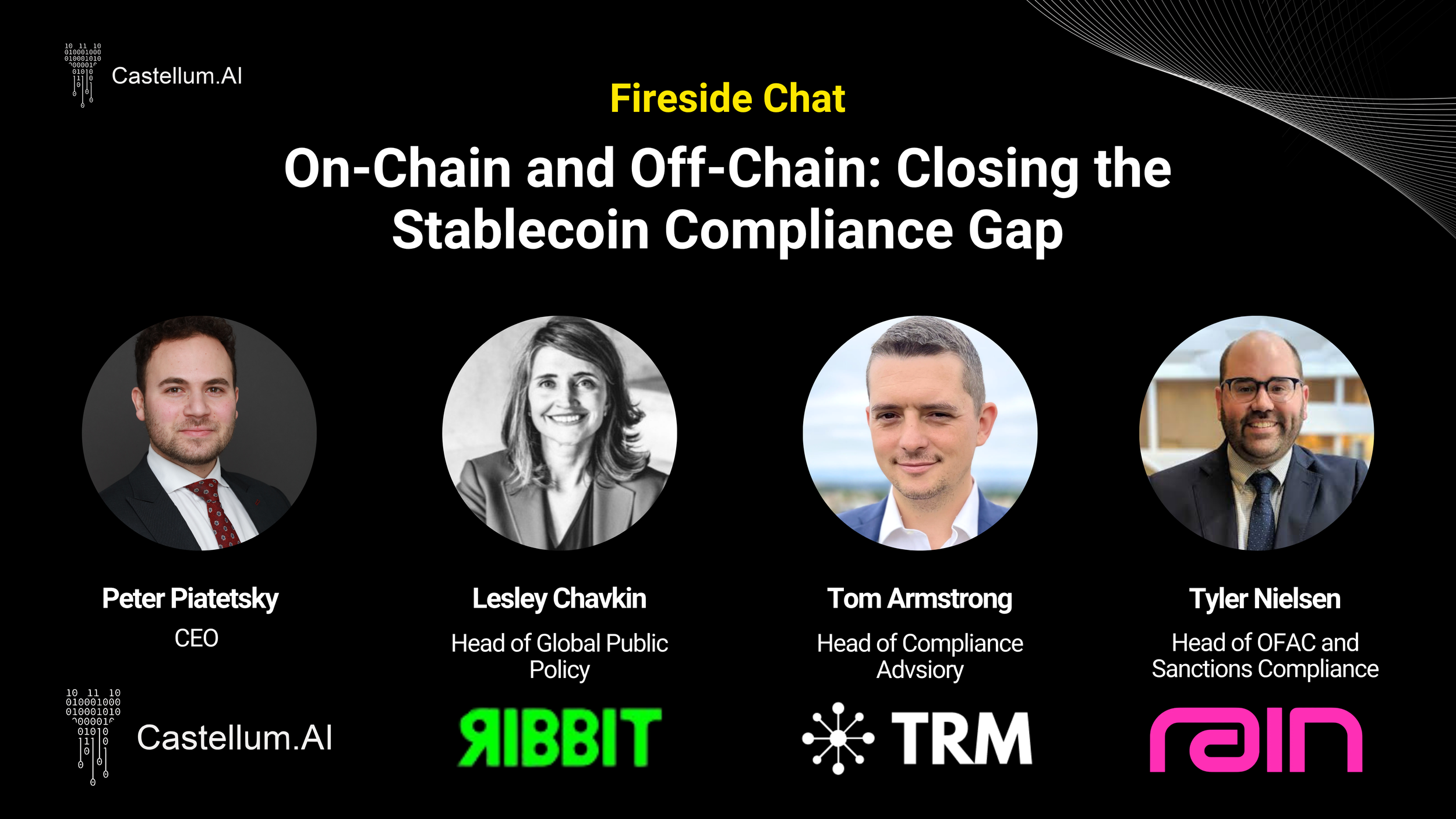
Stablecoins have moved from crypto-native infrastructure to a mainstream payments rail, and compliance programs are playing catch up. In the year since the GENIUS Act passed, the space has evolved fast, and so have the ways bad actors exploit it. This session unpacks real-world cases of stablecoins used in money laundering and sanctions evasion, the typologies compliance leaders need to watch, and what it takes to build a defensible compliance program from the ground up.
Ideation to implementation: building compliance into stablecoin strategy from day one
On-chain vs. off-chain and where screening and monitoring needs differ
Real-world stablecoin use in money laundering and sanctions evasion
On-ramp and off-ramp compliance: managing risk at fiat-to-crypto conversion points
Key obligations under the GENIUS Act and legislation still to watch
Meet the Speakers
Lesley Chavkin
Head of Global Public Policy
Ribbit Capital


Lesley leads public policy at Ribbit Capital, a VC firm investing in fintechs and crypto. She is also a non-resident fellow at the Atlantic Council. Before Ribbit, Lesley served in senior roles at Paxos and Stellar and served in the US Department of Treasury.
Tom Armstrong
Head of Compliance Advisory
TRM Labs

Tom leads TRM’s Compliance Advisory function where he works closely with banks, crypto businesses and regulators on industry best practices for digital asset compliance. Prior to TRM, Tom spent over nine years at Goldman Sachs where he held senior AML roles.
Tyler Nielsen
Head of OFAC and Sanctions Compliance
Rain

Tyler leads sanctions compliance strategy at Rain, a stablecoin infrastructure company. Before Rain, Tyler founded SET Global, a consultancy advising banks and fintechs on fincrime compliance. He previously held multiple roles in the US government around sanctions design, implementation and impact.

Peter Piatetsky
CEO and Co-Founder
Castellum.AI
Peter leads strategy, growth and product at Castellum.AI, working closely with clients to implement risk-aligned solutions. Prior to co-founding Castellum.AI, Peter served at the US Treasury Department.
Featured Resource
How to Evaluate AI Agents for AML/KYC Workflows
A practical guide for teams to assess, test and implement AI agents into compliance workflows. What’s inside the guide:
True agentic AI vs. automation: How to spot real autonomy, not just workflow orchestration.
Data governance: Why ownership and control of risk data matters for safe decisioning and auditability.
Human-in-the-loop design: How to ensure the right feedback loop to improve accuracy and accountability.
Regulatory readiness: How to align AI deployment with emerging regulatory expectations.